
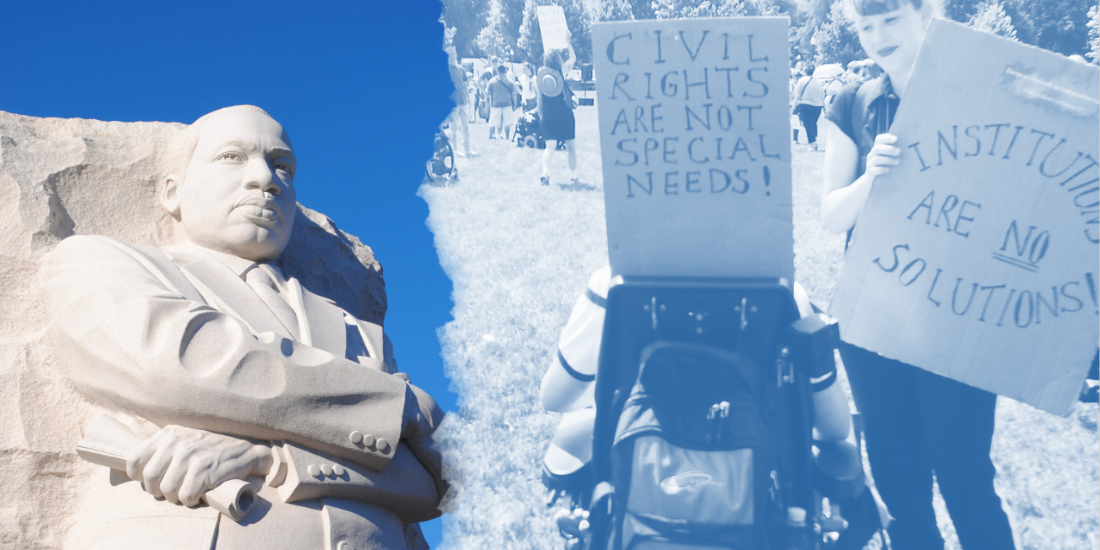
Employment and the Legacy of Dr. Martin Luther King
Our power comes from working together to break down barriers and toward a world where all of us have equal opportunity to thrive.
Dr. Martin Luther King, Jr. Day will soon be upon us. This holiday is a time for all Americans to reflect upon Dr. King’s momentous efforts and accomplishments, as well as his unrealized goal: creating a fully equitable and accessible society.
The stronger the Civil Rights Movement became, the more Dr. King sharpened the focus of his dream.
Dr. King wanted real change. He continued to deepen his learning and understanding of inequity as he organized with others across the country. Dr. King’s work was shaped by two ideas he came to know as truths fundamental to building a more just society:
- First, the movement for Civil Rights must include all marginalized people, including the burgeoning Disability Rights Movement inspired by activists like Dr. King.
- Second, employment is key to achieving a just society. Civil rights alone do not solve inequity, especially when poverty remains pervasive. Good jobs are the most direct path to economic opportunity.
Dr. King delivered his most iconic speech, “I Have a Dream,” as part of the March on Washington for Jobs and Freedom in 1963.
Economic inequality remained central to his work. At the time of his assassination, Dr. King was organizing the Poor People’s Campaign. (Dr. King’s fellow organizers carried out the planned Poor People’s March on Washington and delivered demands to Congress including an “Economic Bill of Rights.”)
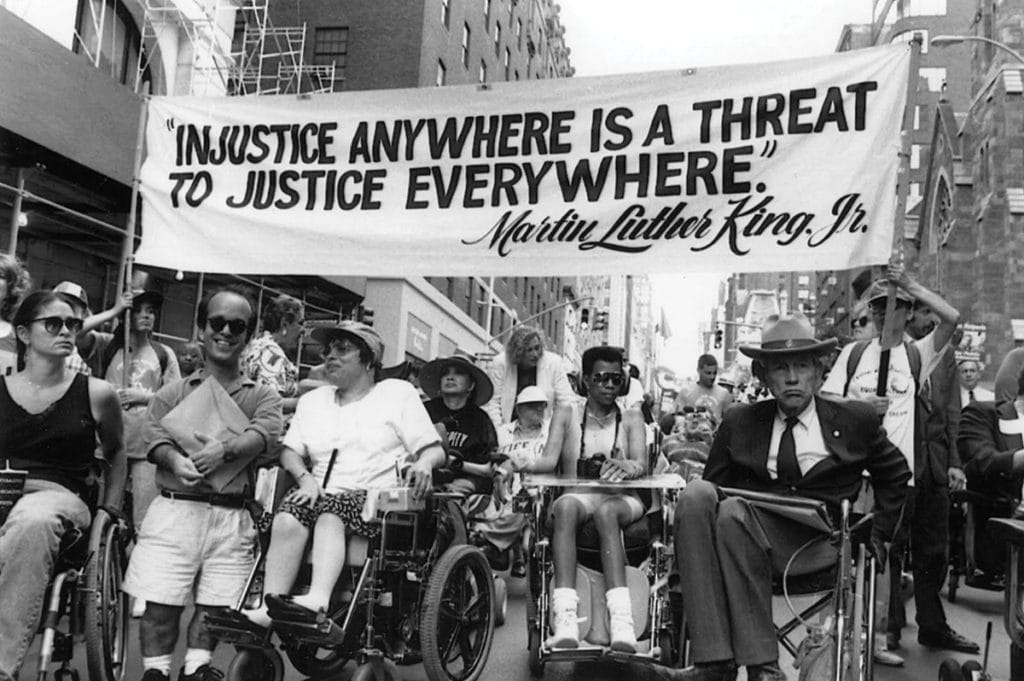
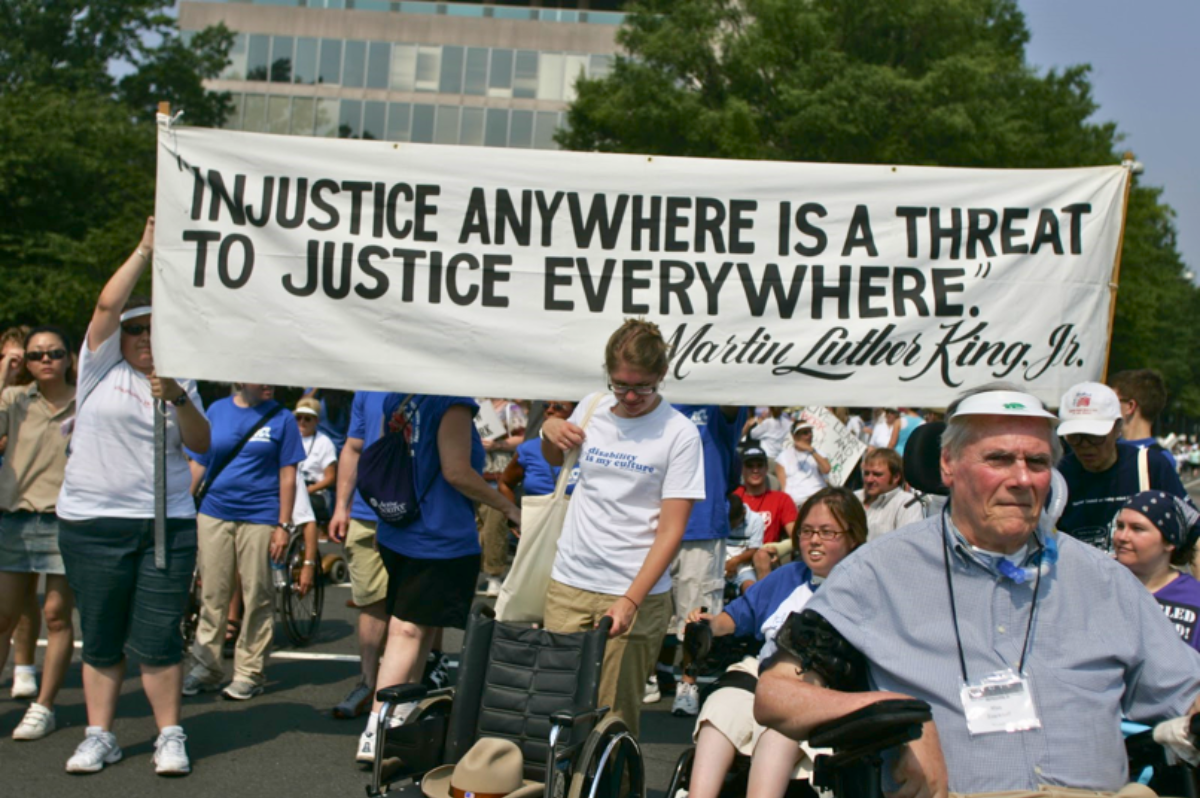
Civil Rights and Disability Rights: Two Movements Working Together
The Civil Rights Movement fought for the equal rights of minorities.
Many people consider the term “minorities” as synonymous with people impacted by racism, especially Black people in the United States. Ask people to identify minority groups suffering from inequality and disabled people are usually pretty far down the list (if at all) despite being the largest minority group in the country.
Minority groups have their own experiences and different sources and degrees of oppression and discrimination—a blind person has never been lynched because they are blind, nor has a wheelchair user had a cross burned on their lawn for moving to a certain neighborhood.
Oppression can be driven by bigotry and hate…and it can also come from paternalistic systems with good intentions.
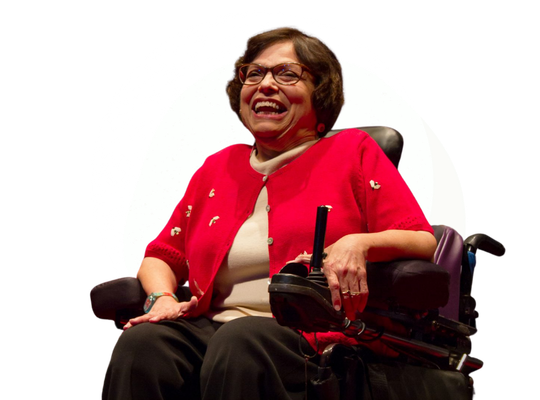
It is important to investigate the varied modes and degrees of discrimination that impact us, and the compounding effect of having multiple minority identities. But there is no value in vying for the title of most oppressed.
Our power comes from working together to break down barriers and toward a world where all of us have equal opportunity to thrive.
Starkloff Disability Institute connects deeply with our roots in the Disability Rights Movement. Max Starkloff was one of its leaders, who freed himself from a nursing home and went on to establish one of the country’s largest Centers for Independent Living to make sure the next generation had options to be part of society. Max and Colleen Starkloff worked to get civil rights for disabled people codified under the historic Americans with Disabilities Act. Economic independence, and with it the power to make meaningful choices for one’s own life, remained out of reach. The Starkloffs founded our organization in 2003 to focus on barriers to employment for people with disabilities.
That is the work we continue today: leveling the playing field for talented professionals with disabilities in the workplace.
As Dr. King said, “If a man doesn’t have a job or an income, he has neither life nor liberty nor the possibility for the pursuit of happiness.”
Employment, and the economic independence a paycheck provides, will help us realize a more just society for all. Let us remember the legacy of Dr. King and come together to tap into power greater than the sum of our parts. Thank you, Dr. King!
Header photo image description: The Martin Luther King, Jr. Memorial overlapped with a photo of disability rights advocates carrying signs declaring: “Civil Rights are not special needs!” and “Institutions are no solutions!”
Note: An earlier version of this essay by Steve Foelsch was written in 2019.